
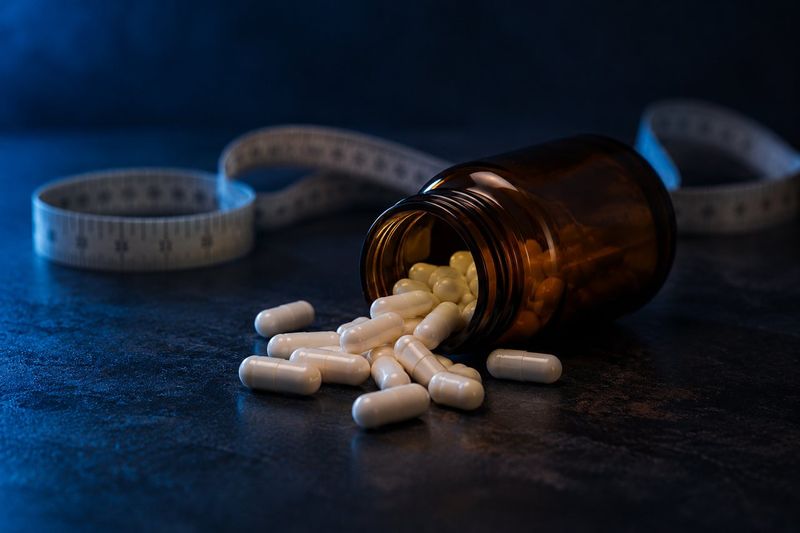
L-carnitine is a compound that carries fatty acids into the mitochondria, the power plants of your cells, where fat is turned into energy. The body makes it on its own, in the liver and kidneys, and also gets it from food. In meta-analyses, which pool the results of several studies, the supplement reduced weight by an average of 1.1–1.3 kg more than in control groups without it. Waist circumference and body fat percentage didn't change significantly. People lose weight because of a calorie deficit: when they take in less energy from food than they burn.
I'm Demid Lobanov, a fitness coach. I judge supplements only by meta-analyses and randomized trials, not by manufacturers' websites, and in my nutrition materials L-carnitine is on the list of supplements with more marketing than evidence behind them. Below is what the research shows.
What L-carnitine is and what the body needs it for
L-carnitine is needed to get long-chain fatty acids inside the mitochondria, where they are oxidized to produce energy. It's made by the liver and kidneys. Among foods, meat has the most carnitine, especially red meat.
The body holds on to its carnitine: the kidneys return 98–99% of what they filter back into the blood. Up to 75% of the carnitine in ordinary food is absorbed, but from a supplement at 1–6 g, only 5–18%.
In a 2019 study by Koeth et al., fasting blood carnitine levels were similar in 32 vegans and vegetarians and in 40 people who eat meat.
Can you be low in carnitine?
Yes, but that comes with disease. In primary deficiency, the kidneys retain carnitine poorly, or it has a harder time getting into the muscles. Secondary deficiency develops, for example, in people on hemodialysis, where a machine cleans the blood when the kidneys have failed: carnitine is lost through the machine. This kind of deficiency is diagnosed and treated by a doctor.
Does L-carnitine help you lose weight?
A little. A 2020 meta-analysis by Talenezhad et al. pooled 37 randomized trials with a total of 2,292 people. In trials like these, participants are assigned to groups at random. With L-carnitine, weight dropped 1.21 kg more than without it, and fat mass 2.08 kg more. Waist circumference and body fat percentage didn't change significantly. In the high-quality studies, the effect held up only for weight. The authors describe it as moderate, especially in adults with excess weight.
In the 2020 meta-analysis by Askarpour et al. (43 studies), weight dropped 1.13 kg more and fat mass 1.16 kg more, and the effect showed up only in people with overweight and obesity. Body fat percentage and waist circumference didn't change significantly. In the 2016 meta-analysis by Pooyandjoo et al. (9 studies, 911 people), weight dropped 1.33 kg more, and the longer people took the supplement, the smaller the effect got.
For comparison: exercise alone, without dieting, gives people with excess weight an average loss of 1.5–3.5 kg, according to the 2021 overview of reviews by Bellicha et al. What matters most for weight loss is a calorie deficit; see the article How Many Calories You Need a Day.
| What they promise | What the research shows |
|---|---|
| Burns fat | weight 1.1–1.3 kg and fat mass 1.2–2.1 kg lower than without the supplement; waist and body fat percentage don't change significantly |
| Carries fat into the muscles, where it gets burned during your workout | 6 g a day for 2 weeks didn't raise muscle carnitine or change fat burning |
| Boosts endurance | no improvement during moderate-intensity exercise |
| Speeds up recovery | less muscle soreness; muscle damage markers lower only one day later |
| Safe at any dose | safety is well studied up to 2 g a day; blood levels of TMAO go up, a compound formed from carnitine with the help of gut bacteria |
Why L-carnitine doesn't burn fat in your muscles
The advertising logic goes like this: more carnitine means more fat gets into the mitochondria and is burned. But your muscles already have enough carnitine. In a 1994 study by Vukovich et al., participants took 6 g of L-carnitine a day for 7 and 14 days. Their blood carnitine went up, but their muscle carnitine didn't, and they burned the same amount of fat during exercise. The authors concluded that there is enough carnitine in the mitochondria for fat oxidation.
In meat eaters, muscle carnitine could only be raised together with large amounts of carbs; in vegetarians, in one of the studies in the Sawicka review, it rose even without them, but exercise performance didn't change. In a 2011 study by Wall et al., 14 men got 80 g of carbs twice a day for 24 weeks: half with 2 g of L-carnitine L-tartrate, a salt containing 1.36 g of carnitine, and half without it. In the carnitine group, muscle carnitine content went up by 21%. But 160 g of carbs a day is about 640 kcal: on a diet, a supplement like that gets in the way of your deficit.
In a similar 2013 study by Stephens et al., over 12 weeks, weight and fat in the carbs-only group went up by 1.9 and 1.8 kg, while in the carnitine group they didn't change. Here carnitine kept people from gaining fat from the extra carbs, but it didn't lower their weight. Each group had 6 people.
Does L-carnitine help your workouts?
No meaningful benefit has been proven. The International Society of Sports Nutrition (ISSN), in its 2018 review with recommendations, places carnitine among supplements whose effectiveness is barely supported: according to most of the data, it doesn't noticeably change muscle carnitine, fat burning, or exercise performance.
In a 2021 systematic review by Mielgo-Ayuso et al. (11 studies), there was no improvement during moderate-intensity exercise. During high-intensity exercise, performance improved in some of the studies, with 3–4 g taken 60–90 minutes before the test or 2–2.72 g a day for 9–24 weeks. In a 2018 study by Shannon et al., 24 weeks of interval training with 3 g of carnitine plus carbs produced the same endurance gains as carbs alone. In this kind of training, periods of work alternate with periods of recovery.
As for recovery: in a 2020 meta-analysis by Yarizadh et al. (7 studies), with L-carnitine, muscles were less sore for 4 days after exercise, while blood markers of muscle damage were lower only at 24 hours. The effect was found both in people who did strength training and in untrained people.
What L-carnitine does for women and men
For healthy people, the answer is the same as above: the effect on weight is small. In one of the studies in the 2020 review by Sawicka et al., healthy women aged 65–70 took 1.5 g of L-carnitine L-tartrate a day for 24 weeks: their body composition and strength didn't change.
L-carnitine has also been studied separately in women with polycystic ovary syndrome, a hormonal disorder. In a 2022 meta-analysis by Liao et al. (6 studies, 672 women), weight, waist circumference, and hip circumference went down, and blood lipid levels improved. But this is treatment of a medical condition, and the decision is up to a doctor.
Is L-carnitine safe?
Long-term safety is well studied up to 2,000 mg a day, calculated as carnitine: that's the limit Hathcock and Shao set in their 2006 risk assessment. Higher doses have also been tested without side effects, but there isn't enough data to say with confidence that they're safe for long-term use.
The second issue is TMAO, trimethylamine N-oxide. With the help of gut bacteria, some carnitine is converted into TMAO, and in the study by Koeth et al., meat eaters produced more of it than vegans and vegetarians. High blood TMAO is linked to heart and blood vessel disease. In the Sawicka et al. review, in healthy women aged 65–70, fasting TMAO rose tenfold after 3 months of taking the supplement and returned to baseline 4 months after they stopped; inflammation markers didn't change. Whether TMAO causes heart disease or is just a sign of it is still unclear.
If you have kidney or heart disease, discuss the supplement with your doctor.
How much L-carnitine people take in studies
Studies in healthy people used 1–4 g a day for 12–24 weeks, according to the Sawicka review. In the Talenezhad analysis, which looked at how the effect depended on dose, the greatest weight loss was at about 2,000 mg a day, which is also the limit of well-studied safety. On average, weight dropped 1.1–1.3 kg more with the supplement than in control groups, and that doesn't predict any one person's result: without a calorie deficit, it won't help you lose a noticeable amount of weight.
What helps you lose weight instead of L-carnitine
For weight loss: a calorie deficit, enough protein, and strength training. That's how you lose fat and keep your muscle. More detail in the articles How to Lose Weight and Cutting.
Among supplements, the ones on the "works" list in my nutrition materials are creatine at 3–5 g a day, caffeine with L-theanine, omega-3s, and correcting nutrient deficiencies. But these aren't weight-loss aids: none of them replaces a calorie deficit. On creatine, see the article How to Take Creatine.
My materials explain it this way: in a healthy person, fat oxidation is limited by the mitochondria themselves. A shortage of carnitine isn't what limits it. This fits with what Vukovich concluded: there's already enough carnitine in the mitochondria.
If you want to lose weight: step by step
- Work out your calorie needs and create a moderate deficit; see the article How Many Calories You Need a Day.
- Eat enough protein; see the article How Much Protein You Need a Day.
- Do resistance training 2–3 times a week; see the article Gym Workout Program.
- If you still decide to try L-carnitine, keep in mind that safety is well studied up to 2,000 mg a day, calculated as carnitine, and that in studies, weight with the supplement dropped on average only 1.1–1.3 kg more than in control groups; that doesn't predict your own result.
- If you have kidney or heart disease or polycystic ovary syndrome, make the decision about the supplement with your doctor.
- Track your average weight for the week, not individual weigh-ins; see the article Weight Not Budging. If your weight goes down while you're taking the supplement, that alone doesn't prove it was the supplement that worked.
If you need meals built around your calorie target and your tastes, there's the meal plan.
I post exercise breakdowns on my YouTube channel @lobanov_fitness.
Sources
- Evans AM et al. Pharmacokinetics of L-carnitine. Clin Pharmacokinet, 2003. Article
- Kerksick CM et al. ISSN exercise & sports nutrition review update: research & recommendations. J Int Soc Sports Nutr, 2018. Article · Full text
- Koeth RA et al. l-Carnitine in omnivorous diets induces an atherogenic gut microbial pathway in humans. J Clin Invest, 2019. Article · Full text
- Talenezhad N et al. Effects of l-carnitine supplementation on weight loss and body composition: A systematic review and meta-analysis of 37 randomized controlled clinical trials with dose-response analysis. Clin Nutr ESPEN, 2020. Article
- Askarpour M et al. Beneficial effects of l-carnitine supplementation for weight management in overweight and obese adults: An updated systematic review and dose-response meta-analysis of randomized controlled trials. Pharmacol Res, 2020. Article
- Pooyandjoo M et al. The effect of (L-)carnitine on weight loss in adults: a systematic review and meta-analysis of randomized controlled trials. Obes Rev, 2016. Article
- Bellicha A et al. Effect of exercise training on weight loss, body composition changes, and weight maintenance in adults with overweight or obesity: An overview of 12 systematic reviews and 149 studies. Obes Rev, 2021. Article · Full text
- Vukovich MD et al. Carnitine supplementation: effect on muscle carnitine and glycogen content during exercise. Med Sci Sports Exerc, 1994. PubMed
- Wall BT et al. Chronic oral ingestion of L-carnitine and carbohydrate increases muscle carnitine content and alters muscle fuel metabolism during exercise in humans. J Physiol, 2011. Article · Full text
- Stephens FB et al. Skeletal muscle carnitine loading increases energy expenditure, modulates fuel metabolism gene networks and prevents body fat accumulation in humans. J Physiol, 2013. Article · Full text
- Mielgo-Ayuso J et al. Effect of Acute and Chronic Oral l-Carnitine Supplementation on Exercise Performance Based on the Exercise Intensity: A Systematic Review. Nutrients, 2021. Article · Full text
- Shannon CE et al. Increasing skeletal muscle carnitine availability does not alter the adaptations to high-intensity interval training. Scand J Med Sci Sports, 2018. Article
- Yarizadh H et al. The Effect of L-Carnitine Supplementation on Exercise-Induced Muscle Damage: A Systematic Review and Meta-Analysis of Randomized Clinical Trials. J Am Coll Nutr, 2020. Article
- Sawicka AK et al. The bright and the dark sides of L-carnitine supplementation: a systematic review. J Int Soc Sports Nutr, 2020. Article · Full text
- Liao D et al. Clinical evidence of the effects of carnitine supplementation on body weight, glycemic control and serum lipids in women with polycystic ovary syndrome: a systematic review and meta-analysis. Gynecol Endocrinol, 2022. Article
- Hathcock JN et al. Risk assessment for carnitine. Regul Toxicol Pharmacol, 2006. Article




