
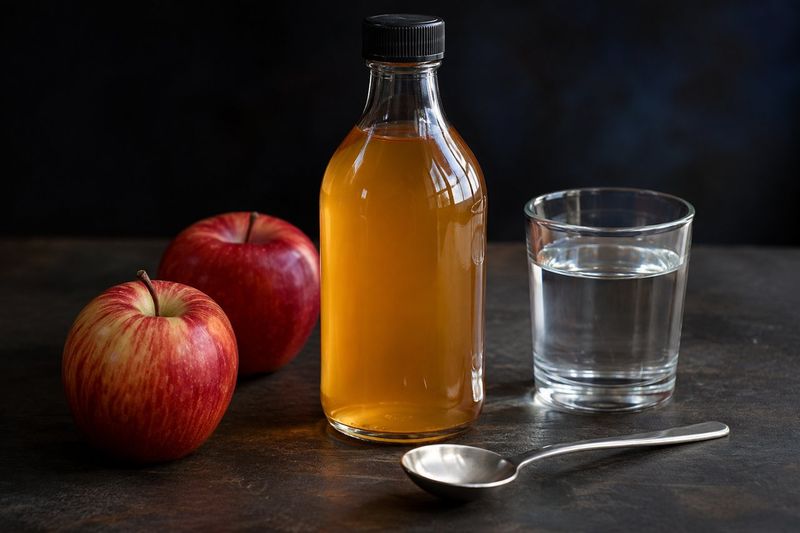
Apple cider vinegar does not noticeably lower weight on its own. Reliable research is scarce: the most publicized trial was retracted in 2025, and the rest are small and short, lasting 4 to 12 weeks. If you enjoy the taste, you can add vinegar to salads and drinks. Still, weight drops because of a daily calorie deficit. Vinegar itself does not burn fat.
I'm Demid Lobanov, a fitness coach. In the meal plans I build for clients, vinegar is never used as a weight-loss aid: weight comes down through daily calories, protein, and physical activity.
Does apple cider vinegar help you lose weight
Evidence is limited and weak. In the 2020 systematic review by Launholt et al., the authors examined 13 human studies and concluded there is not enough high-quality research to claim benefits of vinegar for health or body weight.
In a 2009 Japanese randomized trial by Kondo et al., adults with overweight drank a beverage containing 15 or 30 mL of vinegar per day for 12 weeks. Their average body mass index was around 27, which is classified as obesity in Japan. Body weight, waist circumference, and visceral fat ended up lower than in the placebo group. That is a single study.
A 2021 meta-analysis by Valdes et al. pooled 16 randomized trials with 910 participants. Vinegar and other sources of acetic acid had no effect on body mass index or body fat percentage.
A 2025 meta-analysis by Castagna et al. combined 10 randomized trials, 9 of which entered the weight calculation. The authors calculated an average weight reduction of roughly 7.4 kg and called it clinically meaningful. That figure cannot be trusted. Results varied widely across studies, and the authors themselves noted signs that small trials with favorable outcomes were published more readily.
Most importantly, the calculation included a trial from Lebanon that was later retracted. It did not even meet the meta-analysis's own eligibility rules: the review required adults aged 18 and older, whereas participants in the Lebanese study were 12 to 25 years old.
Why the vinegar weight-loss study was retracted
In 2024, Abou-Khalil et al. published a trial in which adolescents and young adults aged 12–25 with overweight drank apple cider vinegar for 12 weeks and supposedly lost substantial weight. It received wide media coverage.
In 2025, the journal retracted it. Independent reviewers could not reproduce the authors' statistical analysis, found multiple errors, and saw data patterns inconsistent with random group assignment.
Articles and videos calling vinegar a weight-loss remedy based on that paper are relying on retracted data.
How vinegar was taken in studies
In the Kondo trial, 15 or 30 mL of vinegar was diluted in 500 mL of beverage and consumed daily. Vinegar is an acid, so trials gave it diluted. According to USDA data, 100 g of apple cider vinegar has about 21 kcal, and 15 mL has about 3 kcal.
In the review by Launholt et al., the authors rated the risk of side effects as minor when vinegar is used in recommended amounts and diluted properly. Still, tooth enamel damage appeared in a controlled study: healthy adults drank two tablespoons of vinegar in a glass of water twice daily for 8 weeks, and signs of erosive tooth wear rose by 18% while remaining unchanged in the control group (Anderson et al., 2021). That is why vinegar is only taken diluted.
Who should avoid vinegar
If you have stomach or esophageal conditions, medicated diabetes, or another illness where a doctor prescribes your diet, discuss vinegar as a supplement with your doctor first. In type 1 diabetes with delayed gastric emptying, vinegar slowed stomach emptying even further (Hlebowicz et al., 2007).
What works instead of vinegar
According to the International Society of Sports Nutrition position stand (Aragon et al., 2017), fat loss depends on a sustained calorie deficit. Simple habits help: protein at every meal, vegetables in place of part of a side dish, and weighing calorie-dense foods. More in the article How to Lose Weight.
Apple cider vinegar for weight loss: step by step
- Don't count on vinegar as a weight-loss tool: reliable evidence isn't there.
- If you like the flavor, use it in salads or drink it only diluted: undiluted vinegar harms tooth enamel.
- Don't rely on the Lebanese vinegar study: it was retracted.
- With stomach or esophageal disease, or diabetes treated with medication, check with your doctor first.
- Track your daily calories and protein: that is what brings weight down.
- After two weeks, compare your average weekly weight with the previous week's average. If your weight isn't going down, trim portions of calorie-dense foods.
I publish breakdowns of nutrition and training on my YouTube channel @lobanov_fitness.
Sources
- Launholt TL et al. Safety and side effects of apple vinegar intake and its effect on metabolic parameters and body weight: a systematic review. Eur J Nutr, 2020. Article
- Kondo T et al. Vinegar intake reduces body weight, body fat mass, and serum triglyceride levels in obese Japanese subjects. Biosci Biotechnol Biochem, 2009. Article
- Castagna A et al. Effect of Apple Cider Vinegar Intake on Body Composition in Humans with Type 2 Diabetes and/or Overweight: A Systematic Review and Meta-Analysis of Randomized Controlled Trials. Nutrients, 2025. Article · Full text
- Retraction: Apple cider vinegar for weight management in Lebanese adolescents and young adults with overweight and obesity: a randomised, double-blind, placebo-controlled study. BMJ Nutr Prev Health, 2025. Retraction notice
- Valdes DS et al. Effect of Dietary Acetic Acid Supplementation on Plasma Glucose, Lipid Profiles, and Body Mass Index in Human Adults: A Systematic Review and Meta-analysis. J Acad Nutr Diet, 2021. Article
- Anderson S et al. Evidence That Daily Vinegar Ingestion May Contribute to Erosive Tooth Wear in Adults. J Med Food, 2021. Article
- Hlebowicz J et al. Effect of apple cider vinegar on delayed gastric emptying in patients with type 1 diabetes mellitus: a pilot study. BMC Gastroenterol, 2007. Article · Full text
- USDA FoodData Central, SR Legacy: Vinegar, cider (FDC 173469). Database
- Aragon AA et al. International society of sports nutrition position stand: diets and body composition. J Int Soc Sports Nutr, 2017. Article · Full text